
MARIO PINTON
Italy, 1919–2008
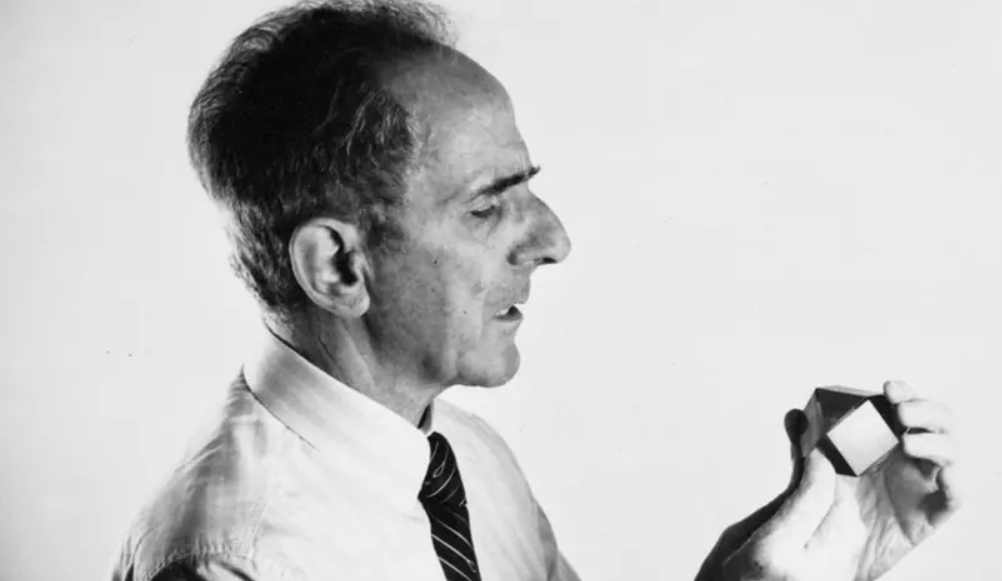
Mario Pinton was a pioneering Italian goldsmith, sculptor and educator, widely regarded as the founder of the renowned Padua School of contemporary jewellery. Born in Padua, he learned the art of metalworking in his father's workshop before pursuing studies in Venice, Monza and at the Brera Academy of Fine Arts in Milan.
A visionary figure in twentieth-century jewellery design, Pinton revolutionised traditional goldsmithing by elevating jewellery from decorative ornament to an independent form of artistic expression. His creations evolved from classical and figurative influences towards an increasingly abstract and sculptural language, distinguished by refined proportions, elegant lines and a profound understanding of gold's expressive qualities.
Beginning in 1944, he taught at the Pietro Selvatico Art Institute in Padua, where he mentored a generation of influential jewellery artists, including Francesco Pavan and Giampaolo Babetto. His innovative approach laid the foundations for the internationally celebrated Padua School, whose artistic philosophy continues to shape contemporary jewellery design.
Pinton's work has been exhibited internationally and is represented in prestigious museum collections, including the Victoria and Albert Museum in London, the Musée des Arts Décoratifs in Paris and the Schmuckmuseum Pforzheim in Germany.
Padua School
The Padua School emerged in the 1950s in Padua, Italy, under the influence of goldsmith and educator Mario Pinton. It revolutionised contemporary jewellery by treating it as an independent art form, combining geometric abstraction, architectural forms and exceptional craftsmanship. Rejecting traditional ornamentation, its artists explored the sculptural potential of precious metals, establishing an influential movement that continues to shape contemporary jewellery.